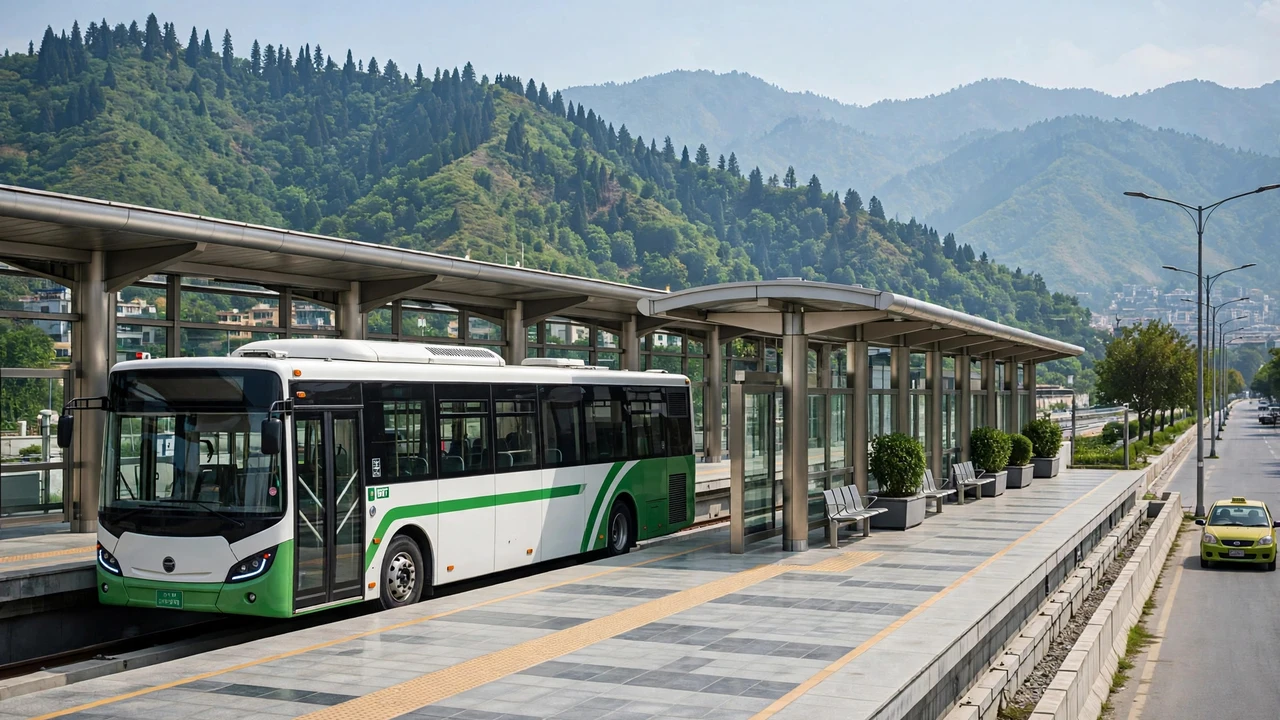
If you travel around Islamabad every day, one question comes up again and again: is the metro bus really that much cheaper than a ride-hailing car? The short answer is yes, by a wide margin, but the two options are not really doing the same job. One is a fixed-route bus at a flat fare, and the other is a door-to-door car priced per trip.
Before comparing prices, there is one important update to clear up. Careem no longer operates ride-hailing in Pakistan — it suspended all Pakistan operations on July 18, 2025. So in 2026, the real comparison in Islamabad is metro bus versus inDrive (and similar apps like Yango and Bykea), not versus Careem.
Metro Bus: The Cheapest Way to Cross the City
A metro bus ride in Islamabad typically costs around Rs 30 to Rs 50, depending on the line. The Red Line between Pak Secretariat and Saddar sits at the lower end, while CDA-run services like the Orange, Green and Blue lines are typically around Rs 50. You pay the same flat fare whether you ride two stops or travel end to end, which makes budgeting very simple.
That flat fare is what makes the metro so hard to beat for daily commuting. A return trip for a whole working week costs only a few hundred rupees, while a single car ride across the twin cities can cost more than that on its own. If your start and end points are both near metro stations, the bus wins on price almost every time.
inDrive: Door-to-Door Comfort at a Much Higher Price
inDrive works very differently. There is no fixed fare chart: you propose a price for your trip, and drivers accept, decline or counter-offer. That gives you control, but it also means the price depends on distance, demand, time of day and how many drivers are nearby. A short car trip across town will typically cost several hundred rupees, not tens of rupees.
To put it in perspective, inDrive’s own Islamabad guide puts traditional taxi fares from F-6 Markaz to Saddar, Rawalpindi at around PKR 400–850, with inDrive letting you set and confirm your own price upfront instead. Its bike rides are far cheaper than cars — its published estimates start at around Rs 90 for 4 km — but a bike is not a like-for-like swap for a comfortable car ride with luggage or family.
So Which One Should You Choose?
Choose the metro bus when your route follows a metro corridor and you want the lowest possible fare. It is best for students, office commuters and anyone travelling the same route every day, as long as you can walk to and from the stations at both ends. The trade-off is fixed routes and fixed timings, with no doorstep pickup.
Choose inDrive when you need door-to-door travel, you are carrying luggage, travelling late at night, or your destination is far from any metro station. You will pay many times the metro fare, but you save walking time and get a direct ride. For most daily commuters, the smart mix is simple: metro bus for the regular commute, and inDrive only for the trips the bus cannot cover.