Public Transport Islamabad: Complete Guide 2026
Getting around Islamabad and Rawalpindi is much easier than it used to be. A network of metro buses and electric feeder buses now connects the main sectors, hospitals, universities and the airport, and for most daily trips it is the cheapest way to travel. If you are new to the city or just tired of paying for taxis, this guide explains the whole system in simple terms.
The backbone of the network is the metro bus. The Red Line runs between Pak Secretariat in Islamabad and Saddar in Rawalpindi, passing through Blue Area, Faizabad and Chandni Chowk. The Orange Line connects Faiz Ahmed Faiz station with Islamabad International Airport, which makes it the go-to option for travellers with luggage. Both lines run on dedicated tracks for most of their route, so they are usually faster than road traffic during rush hours.
Electric Buses Inside the City
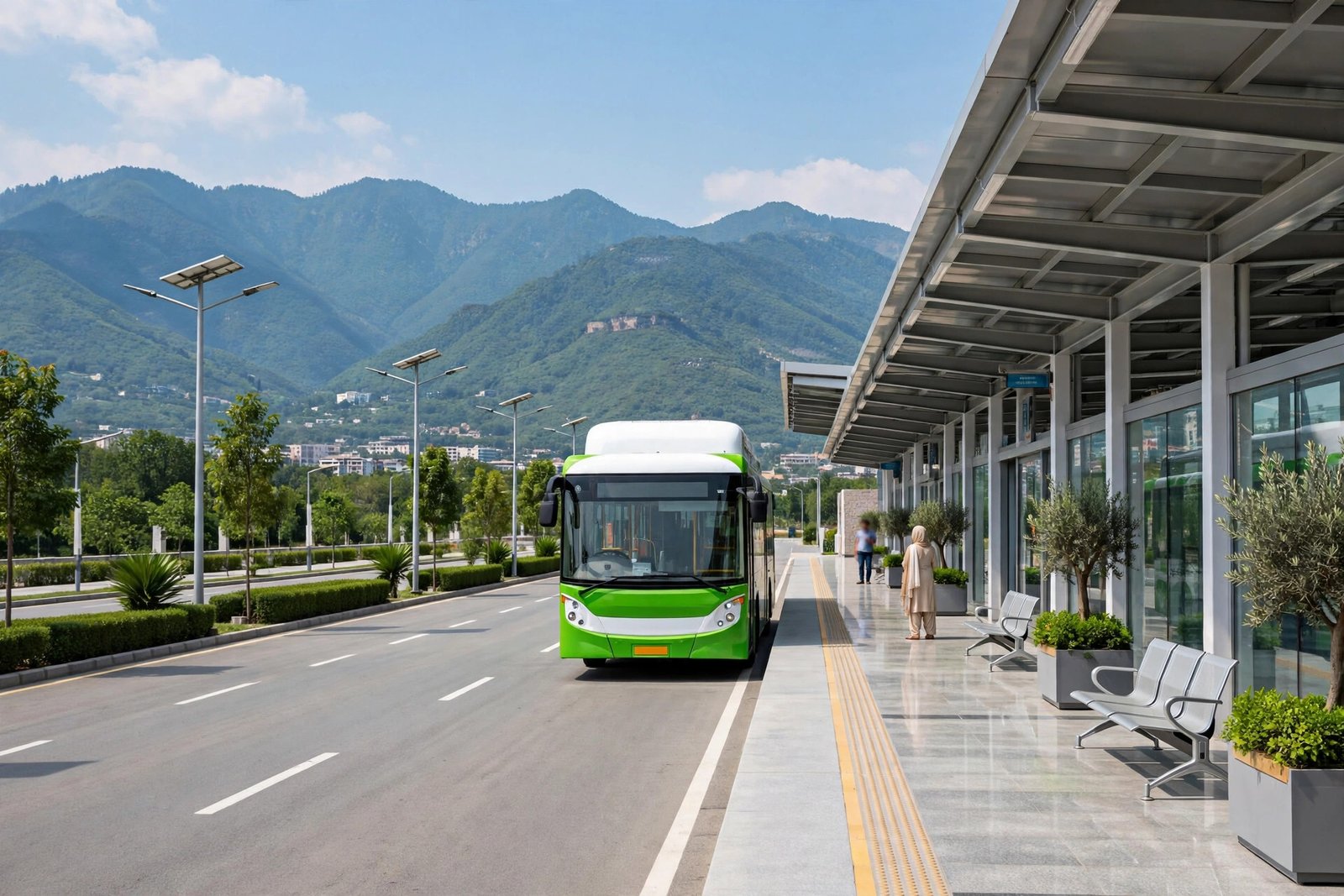
Inside Islamabad itself, the CDA electric buses fill the gaps the metro lines do not reach. The Green Line runs between PIMS and Bhara Kahu, while the Blue Line connects PIMS with Gulberg Greens. On top of these, a set of feeder routes with FR numbers links places like Golra Mor, Khanna Pul, Taxila and Bari Imam to the main metro stations. Together, these routes mean most sectors now have at least one bus option within a short walk.
Fares are kept deliberately low, with a flat charge per ride rather than a distance-based ticket. The Red Line fare is typically around Rs 30, while CDA electric buses have been reported at Rs 50 to Rs 100 depending on the route and when the fare was last revised, so it is worth confirming the current rate at the station before you travel. You can pay with a rechargeable metro card or a token, and regular commuters usually find the card far more convenient than queuing for a token every morning.
Timings and Travel Tips
Most metro and electric bus services run roughly from 6 in the morning until 10 at night, with buses every few minutes on the busy Red and Orange lines and slightly longer gaps on the feeder routes. If you are travelling early in the morning or late at night, check the timing for your exact route in advance, because feeder buses sometimes stop earlier than the main lines. For the airport, allow extra time: the Orange Line is reliable, but the last stretch of any journey can still be slowed by traffic near the terminal.
One thing every commuter should know is that services can occasionally be suspended at short notice, usually for security reasons or major public events. When that happens, the suspension normally affects only part of a route, and ride-hailing cars, local vans and taxis become the fallback. Keeping an eye on local news before an important trip, and having a backup option ready, will save you from being stranded.
Choosing the Right Option
For a daily office or university commute, the metro and electric buses are hard to beat on cost, and they are air-conditioned and far more comfortable than the old wagons. For short trips inside a sector, or when you are carrying heavy luggage, a taxi or ride-hailing car may still make more sense despite the higher price. The smart approach is to mix the two: take the bus for the long stretch of your journey, and a short taxi ride only for the first or last mile. That way you get the best of both worlds without spending a fortune on transport every month.